

Ever found yourself struggling to keep your balance while riding in sand? You’re not alone! Learning how to ride in sand is crucial for anyone looking to take their off-road skills to the next level.
In this article, we’ll break down essential tips and techniques to help you conquer sandy terrains with confidence. Get ready to transform your riding experience and enjoy the thrill of the sand!
How To Ride in Sand For Beginners
Sand riding is different from riding on dirt, gravel, or hard-packed trails. The surface is always shifting under your tires, which means the bike will move around more than you expect. This movement is normal, and fighting it is what causes most beginners to struggle or crash.
The key to riding in sand is staying relaxed and letting the bike move while you stay balanced. Beginners often tense up, grip the bars too tightly, and overcorrect when the front wheel wanders.
Instead, focus on smooth inputs, steady throttle, and proper body position. With practice, the bike will start to feel predictable, even on deep sand.
Lower Tire Pressure For Better Float
Lowering your tire pressure is one of the most important adjustments you can make for sand riding. Soft sand causes tires to dig in, and high pressure makes this problem worse. When pressure is too high, the tires cut through the sand instead of floating on top of it.
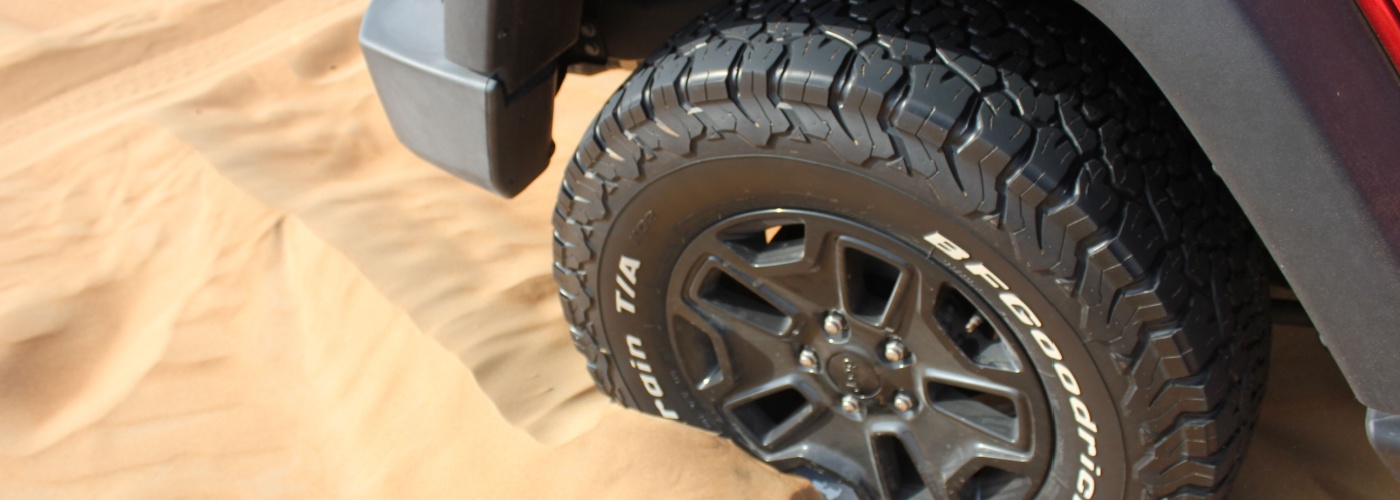
Lower tire pressure increases the contact patch and helps the bike float instead of sinking. This gives you more control, better traction, and a smoother ride.
Most riders drop several PSI compared to hard-pack settings, but the exact number depends on your bike, tire type, and terrain.
Be careful not to go too low, especially if you ride fast or hit hidden obstacles. Extremely low pressure can cause pinch flats or damage rims.
Start with a small reduction, test how it feels, and adjust gradually until the bike feels stable and planted in the sand.
Look Far Ahead To Pick Lines
In sand, your front wheel will often wander, especially at slower speeds. If you stare directly in front of the tire, every small movement feels dramatic and stressful. This leads to oversteering and sudden corrections that make the bike unstable.
Looking far ahead helps your body naturally guide the bike in a smoother, straighter line. Your eyes control your balance more than you realize. When you focus on the trail, your hands relax, and your steering inputs become subtle instead of reactive.
Picking lines in sand also means avoiding deep ruts, soft pockets, and chopped-up sections when possible. Aim for smoother areas with consistent texture.
Even when you cannot avoid rough sand, looking ahead gives you time to prepare your body position and throttle instead of reacting at the last second.
Steer With Weight And Throttle
Steering in sand is less about turning the handlebars and more about shifting your body weight. When you try to steer sharply with the bars, the front tire often digs in and loses stability. This is one of the most common mistakes beginners make.
Use your legs, hips, and throttle to guide the bike instead of forcing the bars. Lean the bike slightly while keeping your upper body balanced and centered. This allows the tires to track naturally through the sand without fighting the surface.
Throttle control also plays a major role in steering. A steady, controlled throttle helps the front tire stay light and stable. Sudden chopping of the throttle can cause the front end to dive and wash out.
Smooth acceleration helps maintain balance and keeps the bike moving forward instead of sinking.
Rinse And Lube Moving Parts
Sand is extremely abrasive and can wear out bike components faster than most other riding conditions. It works its way into chains, bearings, suspension seals, and pivot points. If left uncleaned, sand can cause grinding, stiffness, and premature damage that requires repairs.

Rinsing and lubricating your bike after sand riding is essential for long-term reliability. Use low-pressure water to wash off sand from the chain, drivetrain, suspension, and brakes. Avoid blasting water directly into seals or bearings.
After rinsing, dry the bike and apply lubricant to the chain and other moving parts. Check for sand buildup in hard-to-see areas like the front sprocket, swingarm, and linkage.
Regular maintenance after sand rides keeps your bike performing smoothly and prevents costly repairs.
Use A Higher Gear For Traction
Using the wrong gear in sand can make riding much harder than it needs to be. Low gears create abrupt power delivery, which can cause the rear tire to dig in and spin. This leads to loss of forward momentum and makes the bike feel unstable.
A higher gear smooths out power delivery and improves traction in sand. Riding one gear higher than usual helps keep the throttle response controlled and predictable. This allows the rear tire to hook up instead of spinning aggressively.
Higher gears also reduce engine braking, which can upset the bike when you roll off the throttle. With less sudden deceleration, the bike stays balanced and tracks straighter through loose sections. Focus on maintaining steady momentum rather than constant acceleration and braking.
As you gain confidence, you will learn how to balance gear choice, throttle input, and body position for different sand conditions.
Deep sand, soft dunes, and packed beach sand all require slightly different approaches, but the principle of smooth power remains the same.
What Causes Uneven Motorcycle Tire Wear?
Motorcycle tires do not always wear at the same rate across the entire tread. Certain wear patterns may point to maintenance problems, riding habits,
Sep
Common UTV Mistakes New Owners Make
Buying your first UTV is exciting, but learning how to operate and maintain it properly is just as important. Making even one small UTV
Aug
What Causes Jerky Throttle Response in Electric Bikes
Electric bikes are designed to provide smooth and responsive power, making rides more enjoyable and efficient. However, when the throttle feels inconsistent or unpredictable,
Jul